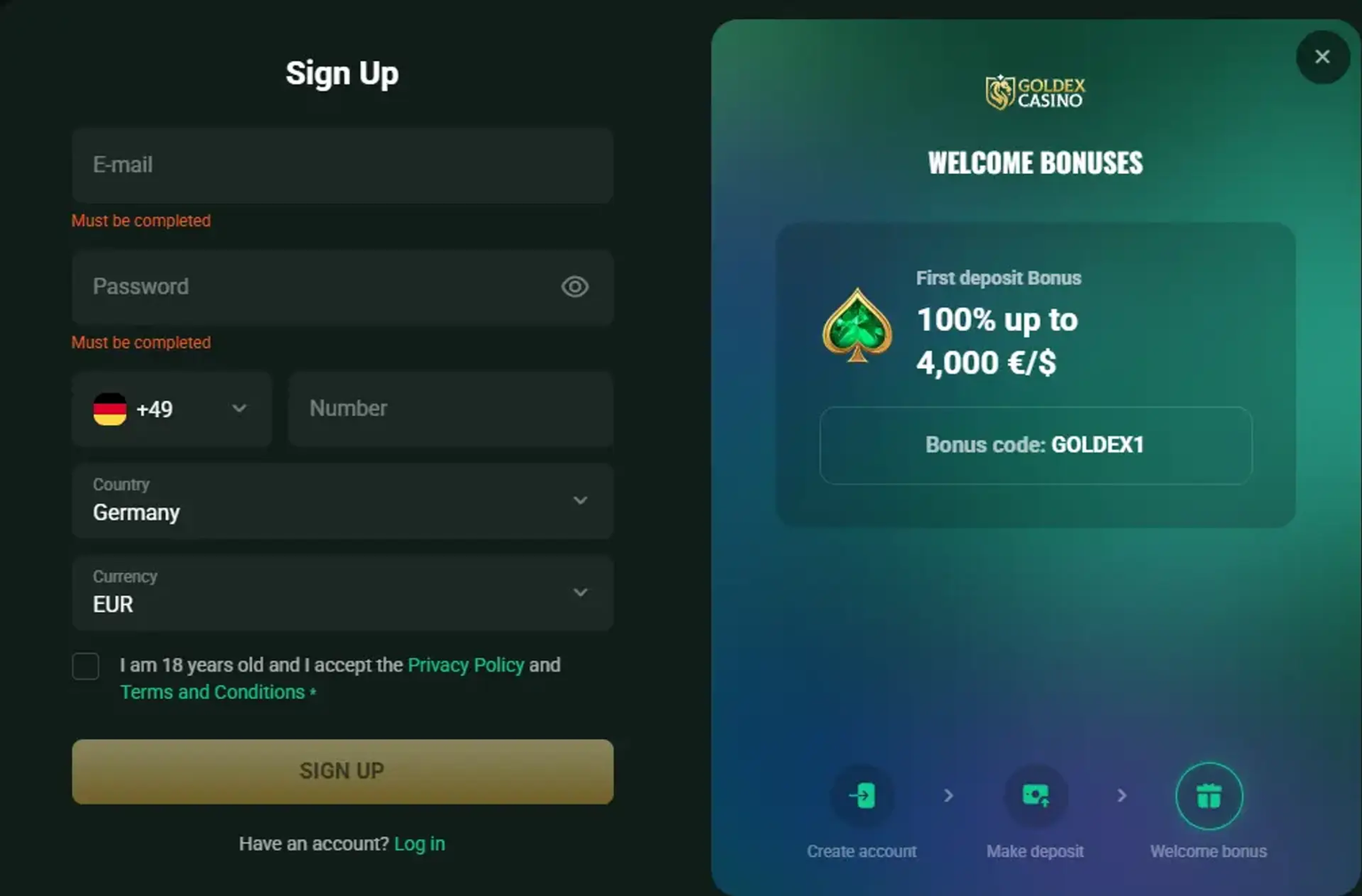
Goldex Casino Login Australia

A hands-on 2026 walkthrough for adult access in Australia - sign-in, fixes, payments, and limits without guesswork.

Slot Fortune Gems 2

Table of Contents

  • The Dog House Megaways Slot
  • Lucky Joker 10 Extra Gifts Slot
  • Sword of Ares Slot
  • Floating Dragon Hold & Spin Slot
  • Leprechaun Riches Slot
  • Fruit Coctail Slot
  • The Dog House Megaways Slot
  • Sword of Ares Slot
  • Fruit Million Slot
  • The Dog House Megaways Slot
  • Fruit Box Slot
  • Big Fisherman Slot
  • Seven Books Unlimited Slot
  • Goldex Casino Fortune Slot
  • Sword of Ares Slot
  • Floating Dragon Hold & Spin Slot
  • 9 Mad Hats Slot
  • Floating Dragon Hold & Spin Slot
  • Big Bass Splash Slot
login 1

Goldex Casino Login: Fast Entry Checks

Picture a short break between errands: you want to get in, check your balance, maybe play a few spins, and leave without wrestling with prompts. Most sign-in problems come from speed, not complexity. The trick is to slow down for sixty seconds so the rest of the session stays smooth.

Start with a “one device, one attempt” rule. If you open the platform on your phone and laptop at the same time, you create two parallel sessions that can confuse confirmations and codes. Close duplicate tabs, pick one screen, and finish the entry flow there. You are not being cautious for no reason - you are reducing the odds of a loop where one screen refreshes and the other shows an outdated step.

Next, treat autofill as a suspect. It often inserts an old email, a hidden space, or the wrong keyboard layout on mobile. If anything looks even slightly off, delete the fields fully and type manually. It takes ten seconds and saves you from five minutes of “but I swear it’s correct”.

This platform is available to adult players in Australia and is meant to be used within applicable rules and age restrictions. That context matters because security prompts can appear when the system needs clarity, not because something “went wrong”. Focus on what you can control: accurate input, stable device, and a calm recovery plan if you need it.

Sign-In Screen Loops And The One-Change Rule

Imagine the page reloads, you tap again, it reloads again, and suddenly you are clicking out of frustration. That usually makes the loop worse. Make one change, then retry once: refresh the page, open a private window, or switch from Wi-Fi to mobile data - but only one at a time.

Private browsing is the cleanest test. If the entry works there, the issue is often old session data, not your account. At that point, closing old tabs and clearing site data (once, not repeatedly) is a practical fix. If private mode does not change anything, stop tinkering with the browser and move toward account recovery instead of random guesses.

One-Time Codes Without The Chaos

Picture requesting a code twice because you’re impatient, then receiving two messages and trying both in the wrong order. That is a classic time-waster. Request one code, keep the confirmation screen open, and use the newest code immediately.

If you are swapping between apps on your phone, timing slips happen fast. Keep the login prompt on-screen, copy carefully, and avoid jumping to other apps while the timer is running. When codes fail, it is often because the code is stale, typed with a missing character, or entered after a quick app switch - not because the whole system is broken.


First-Time Setup After You Get Inside

Think about the first successful entry as onboarding, not as the finish line. Imagine you finally access your account, your adrenaline spikes a little, and you jump straight into a game to “make the time back”. That is how people skip the boring steps and later run into friction when money or verification is involved.

login 2

Do a quick profile sweep while you are calm. Confirm your contact details are correct and that you can access your recovery channel. If identity checks appear in your account area, handle them early, in good lighting, when you can take clean images and read instructions without pressure. Waiting until you want to withdraw is the fastest way to turn a good night into paperwork.

Now set your defaults. A session timer, a spending cap, and a cooling-off option are not “for someone with a problem” - they are normal adult controls that keep entertainment from turning into impulse. If you can set them in two minutes now, you prevent the late-night bargaining later.

Building A Two-Minute “Before Play” Routine

Imagine you have thirty minutes tonight and you want it to stay thirty minutes. Create a simple loop: check limits, check cashier access, then pick your game. The goal is consistency - you want the same entry rhythm every time so you do not drift into unplanned decisions.

If you are unsure where anything lives, do a dry run with no money actions. Click through the history screen, the support area, and the limits menu once. That single walkthrough reduces the number of panicked clicks later when you actually care about a status label or a pending request.

login 3

Security Habits For Adult Players In Australia

Security is mostly boring habits done consistently. Imagine you sign in on a shared laptop once, forget to log out, and later realize your session is still active. No hacking, no drama - just a simple mistake that could have been avoided by a clean exit.

Use a private device whenever possible. Keep your phone locked, avoid saving passwords on shared machines, and do not leave the account open in background tabs “just in case”. If the platform offers a way to view active sessions or sign out from other devices, learn where it is while you are calm. It is the kind of setting you only appreciate when you need it quickly.

Also, keep your recovery options current. People focus on strong passwords and forget the real weak point: an old email inbox they no longer use. A strong password does not help if you cannot access the recovery channel when you need it.

Payments And Withdrawal Prep Without Surprises

Money actions feel simple until they do not. Picture this: you deposit quickly, play, win a little, and then decide to withdraw - suddenly you care about every detail you ignored earlier. The best approach is to separate “play mood” from “money mood” so you do not make financial decisions while emotional.

Start with a budget you can lose without stress and a time window you can keep. Fund your account once, then play within that plan. The urge to reload is usually not about the payment method - it is about emotion after a win or a loss. If you feel that urge, pause first. Stand up, take a breath, then decide like an adult instead of clicking like a reflex.

For withdrawals, consistency is the main theme. Keep your account details stable while anything is pending, and avoid editing profile information mid-request. When people panic, they cancel and resubmit repeatedly, change details “to be safe,” and create a confusing history that slows everything down.

Below is a practical checklist-style table you can use as a reminder before you move money.

Situation

What To Prepare First

Common Snag

Better Habit

Funding a session

Budget and time limit

Reloading during a chase

One planned deposit, no top-ups

Requesting a cashout

Clean profile details and verification status

Editing info mid-request

Keep details stable until finished

Checking a status

Transaction history and timestamps

Refreshing constantly

Check on a schedule, not on impulse

Fixing a failed attempt

One clear description of the issue

Changing everything at once

Change one thing, retry once

Deposits With A “One And Done” Rule

Imagine you start with a small amount, lose a bit, and think “I’ll top up so the session feels worth it”. That thought is the pivot point. A simple rule protects you: decide your maximum deposits per day in advance (often one) and treat any extra urge as a signal to take a break, not to add more.

Choose stakes that match your time window. If your balance drops too quickly, you get emotional and start chasing. A calmer pace makes the session feel like entertainment rather than a negotiation with your own impulses.

Withdrawals As Paperwork, Not A Race

Picture submitting a cashout request and then staring at the status label like it’s a live sports score. That anxiety makes people click too much. Submit one clean request, respond only to the exact prompts you see, and avoid cancelling and resubmitting unless support tells you to.

If identity checks are requested, handle them carefully once. Clean images, full corners visible, no glare. This is not the time to rush because you want the payout immediately - rushing usually creates a re-check.

Tracking History Without Panic Refreshing

Imagine you cannot remember whether you deposited once or twice because you were distracted. Build a short ritual: after you finish playing, open the history screen, scan the latest entries, then log out. Two minutes of checking prevents hours of doubt.

If something looks unclear, note the approximate time and what the label says, then contact support with that context. Short and specific messages are more effective than long emotional paragraphs.

Mobile Play And Account Access On The Go

Mobile access is convenient, and that convenience can also make you careless. Imagine you are on the couch, half-watching a video, and you tap through prompts without reading. That is how people accept things accidentally, mis-enter codes, or forget they are still logged in.

Treat mobile sign-in as a focused task. Silence distractions for a minute, complete the entry flow, then continue. If you need to change account details or handle verification steps, many players prefer a larger screen because it reduces misclicks and makes instructions easier to read.

Create a clean exit routine on mobile. Logging out matters more on a phone because sessions blur together: a notification arrives, you switch apps, you come back later, and you forgot what state you left the account in. A deliberate sign-out keeps the next session from starting in confusion.

Notifications, App Switching, And Timing Mistakes

Picture a code arrives, you switch to your messages, then a new notification pulls you away, and you return late. Timing mistakes are common on mobile because attention is fragmented. Keep the confirmation screen open while you enter codes and avoid jumping between apps until the step is complete.

If you frequently play on the move, use a stable connection for sensitive steps like recovery and verification prompts. The goal is not perfection - it is reducing avoidable friction.

Device Security Basics That Actually Matter

Imagine handing your phone to a friend to take a photo while your account is still active in the background. That is how “nothing happened” turns into “why is my session open?”. Lock your device, avoid saving passwords in shared environments, and sign out fully at the end of a session.

If you ever lose your device, the most important thing is to regain control quickly. Keeping recovery channels current and knowing how to end other sessions are practical safeguards, not technical luxuries.

Support And Troubleshooting When You Get Stuck

Support can be helpful, but only if you make it easy for them to understand what happened. Imagine sending “it doesn’t work” and waiting while the agent asks five basic questions. You can skip that back-and-forth by reporting the issue like a checklist.

Before contacting support, do two quick tests: manual re-entry (no autofill) and a private window attempt. If those do not change the behavior, you have already gathered useful context. Then send one concise message: what you tried, what you expected, what you saw instead, and roughly when it happened.

Also, know when to stop troubleshooting. If your mood is rising and you are clicking faster, you are more likely to create new issues. Take a short break, then return with calmer eyes.

Writing A Support Message That Gets A Real Answer

Picture two messages: “Login broken help” versus “Private window works, normal window loops on mobile data; last successful entry was yesterday on desktop”. The second message gives support a path. Include device type, whether you switched networks, and which step fails (password, code, or page load).

Keep it short. One tidy message beats ten fragments that force the agent to stitch together your story.

When Recovery Beats Repeating Attempts

Imagine you try the same credentials five times, get blocked, then panic. Recovery is the calmer route when memory and device disagree. Use recovery early instead of guessing repeatedly, set a new password you can store securely, and then sign in again on purpose to confirm it works.

If recovery feels stuck, stop stacking requests. One reset request, one completion, then wait. Multiple overlapping requests are a reliable way to create timing confusion.

Responsible Play Controls And Cooling-Off Routines

Smooth access is great, but it can also make sessions drift. Imagine you planned twenty minutes, the next game loads instantly, and your brain says “one more”. Without boundaries, convenience turns into time loss.

Set limits before play, not after. Use a spending cap to protect your budget, a time boundary to protect your attention, and cooling-off tools to protect your decisions when emotions spike. If you notice faster clicking, higher stakes “to fix” a feeling, or repeated attempts to chase, take a break first. The best adult habit is “pause, then decide”.

If you ever feel entertainment is turning into compulsion, stronger tools like self-exclusion can create a real pause. Treat those options as responsible controls, not as a label. The point is to keep play healthy and age-restricted, within applicable rules, and always under your own control.

FAQ

This often happens when you have overlapping sessions, unstable connections, or you are switching devices repeatedly. Pick one device for the session, close duplicate tabs, and avoid bouncing between Wi-Fi and mobile data during sensitive steps. If it continues, log out fully, restart the browser, and sign back in once, calmly. When you contact support, mention your device type and whether the issue happens after switching networks, because that detail changes the troubleshooting path.

Stop guessing early and use the recovery flow once. Request a reset, complete it in the same window, set a new password you can store securely, then log out and sign in again to confirm it worked. If you use multiple devices, update the password on your main device first so you do not accidentally trigger prompts by trying the old one elsewhere. Avoid requesting multiple resets in a row, because overlapping requests create timing confusion.

Codes can be delayed when your connection is unstable or when you keep requesting new codes too quickly. Request one code, keep the confirmation screen open, and use the newest code immediately. If nothing arrives, wait a minute before trying again and avoid switching between apps while the timer is running. Staying on one device for the entire step reduces the chance you enter a code after it has already expired.

Decide your session budget and time window first, then set limits before you add funds. Many players deposit “just to start” and only later realize they are playing without boundaries, which makes reloading feel too easy. Use a one-and-done funding habit when possible: one planned deposit, then no top-ups. If you are unsure about a cashier prompt, pause and ask support while you are calm, not after you are frustrated.

Chasing is usually emotional, not logical. Set a spending cap and a timer before you start, and treat either limit as a hard stop. After a big swing, take a short break - stand up, drink water, and let your nervous system settle before you decide anything about stakes or deposits. If you notice you are clicking faster or trying to “fix” a feeling, that is your cue to use a cooling-off tool and step away.

If you have done two clean attempts - manual typing (no autofill) and a private window test - and the behavior does not change, stop guessing. Send one concise message: what step fails, what you expected, what you saw instead, your device type, and the approximate time. Avoid sending multiple short follow-ups that split the context. One clear report usually gets a faster, more accurate response.

Make changes when nothing is pending and you are not in a rush. Update one item, confirm it saved, then log out and back in to verify the change stuck. If identity prompts appear, handle them in good lighting with clear images rather than submitting multiple versions in frustration. Keeping details consistent reduces future friction, especially when you later want smooth cashier actions.